
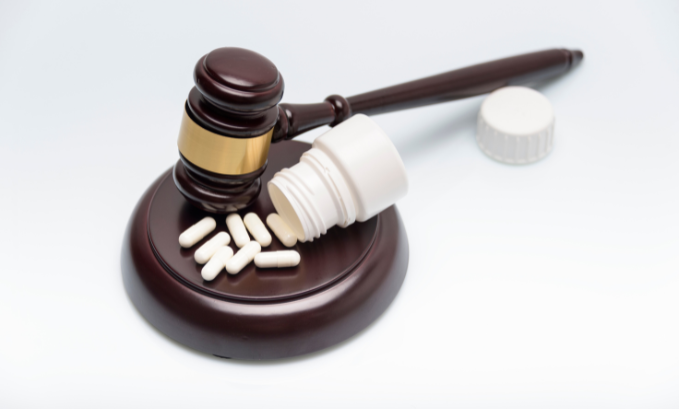
In a lot of cases, those who find themselves in the drug court system are forced to submit to routine drug testing as a component of the recovery process that they are undergoing. Monitoring sobriety and ensuring compliance with the requirements of the court are both performed through the use of these tests. In drug-related jurisdictions, a court-ordered urine drug test represents one of the most common types of testing. Still, what exactly is a court ordered drug test? People often worry, ‘What kind of drug test does drug court use?’ ‘What happens if you fail a court-ordered drug test?’
Let’s explore the main principles of drug court drug testing and how court ordered urine drug tests work.
Discovering What is a Court-Ordered Drug Test
In the context of the legal system, a court ordered drug test refers to a test that is typically administered as a component of a legal process, such as probation, parole, or drug court, and is specifically required by a judge. The major goals of this testing are to detect drug usage and to guarantee that the subjects are following the court-mandated treatment plans. These conditions may include the requirement that individuals remain drug-free as part of a rehabilitation or sentencing plan.
Let’s seek an answer to ‘What kind of drug test does drug court use?’. Urine drug tests have been the most common means of doing these tests. However, there are other options as well. Drug courts around the world often use urine tests due to their reliability, low cost, and ease of use.
Court Ordered Urine Drug Test – Exploring How They Work
The court-ordered urine drug test is a commonly employed and effective method for establishing, in the event a person is impaired by drugs. In most cases, the process is not very complex. When a judge issues a warrant, the defendant is required to submit a urine sample at a lab that the judge has chosen. Once this is done, the sample is taken to a lab to check for traces of specific medications.
Since they can detect a broad range of substances with little effort and expense, urine tests have replaced other methods as the gold standard. Their relative lack of invasiveness makes them more suitable for routine use than alternatives like blood or hair follicle testing. One additional benefit of this simplicity is that it results in reduced expenses for both the courts and the individuals who are being tested.
Investigating What Happens if You Fail a Court-Ordered Drug Test
According to the seriousness of the case and the rules of the drug court, failing a court ordered drug test could lead to serious consequences. The court will likely impose a punishment or consequence on a person with positive results after testing for illegal drugs and alcohol. Some examples of these measures include stricter monitoring and lengthier probationary terms. Mandatory therapy and counseling programs can be recommended. Other options may also be considered.
The failure to comply with the testing criteria of the drug court could, in certain circumstances, result in a violation of probation, which could lead to more severe punishments, such as time spent in jail by the offender. It is essential to have a clear understanding that failing a drug test that has been ordered by the court does not necessarily result in instant incarceration; however, it does initiate a legal procedure in which the judge may take various corrective actions.
Court Ordered Urine Drug Test: Cost-Effectiveness and Simplicity
The fact that court-ordered urine drug tests are among the most widely used in drug courts is largely due to the fact that they are relatively inexpensive. The cost of urine tests is significantly lower compared to other methods of drug administration. Because of this, they are a realistic choice for drug courts, which may have limited resources yet are required to test a significant number of users on a consistent basis.
To add insult to injury, urine drug tests are not only inexpensive but also quite easy to carry out. Simply providing a urine sample, which is subsequently sent to a laboratory for analysis, is all that is required of the individual being tested. The results are often communicated to the court within a few days, which enables the court to make decisions in a timely manner. Because of this simplicity, the process is not only efficient but also cost-effective, with a minimal amount of time elapsed between the testing and the publication of the results.
What Urine Drug Tests Detect
For the purpose of detecting certain drugs, urine drug tests are devised, and the accuracy of these tests is dependent on the substances that are being tested for. In court ordered urine drug test, there are a few different compounds to typically check for.
1. Marijuana (THC)
The presence of this substance constitutes one of the most common findings in drug tests conducted on urine. The detection window for regular marijuana users can be up to 30 days, while the window for infrequent users might be narrower.
2. Cocaine
Urine can be used to detect cocaine use for up to two to four days after the use of the drug.
3. Opiates
The presence of heroin and morphine in urine can be detected for around one to three days after consumption.
4. Amphetamines
Methamphetamine and Adderall in urine can be seen for a period of up to forty-eight hours.
5. Benzodiazepines
It may take anything from a few days to a week for the presence of medications of Xanax and Valium to be identified according to the patterns of use.
6. Methadone
This substance can be seen in urine for up to seven days. And it is utilized in certain addiction treatment programs.
7. Alcohol
It is not generally included in drug tests. However, the presence of alcohol in urine can be detected for up to twelve hours after use of the substance.
Detection Windows of Court Ordered Urine Drug Tests
The detection window indicates the period during which a substance can be detected in urine after use. Each drug has its own detection window. And it is influenced by several factors - the person’s metabolism, frequency of use, and the sensitivity of the test. The general detection windows for some common substances for court ordered urine drug tests are the following.
- 3 days to 30 days for marijuana
- 2 to 4 days for cocaine
- 1 to 3 days for opiates
- 1 to 2 days for amphetamines
- 3 to 7 days for benzodiazepines
- 3 to 7 days for methadone
- 12 hours for alcohol
These detection windows represent basic suggestions. They can differ according to the special circumstances of each person. These factors include the individual's body weight and metabolic rate.
Exploring Why Urine Drug Tests Are Commonly Used in Drug Courts
The popularity of court-ordered urine drug tests in the drug court system can be explained by some main factors.
Reliability
The urine test offers a very accurate way to identify an array of substances. Drug courts that want to keep tabs on their clients' sobriety can rely on them because of their substance recognition capabilities.
Cost-Effectiveness
Urine tests offer the most cost-effective methods for drug testing. In light of this, they become especially helpful for courts because they are working with limited funds but need to conduct frequent testing on a significant number of people.
Simplicity
A urine sample can be collected in an easy manner. The process is straightforward. As a result of this ease, the logistical obstacles of administering the tests are reduced. This makes them a realistic choice for drug courts.
Short Detection Window
In order to ensure that urine tests are able to properly monitor recent drug usage, the detection window of urine tests, which often occurs within a few days following drug use, is utilized.
Conclusion
Any individual who is involved in the drug court system absolutely has to have a solid understanding of the procedure for court-ordered drug testing. Urine drug tests that are ordered by the court are the most common method for identifying drug use. These tests provide the courts with a straightforward, dependable, and cost-effective approach to check compliance with sobriety standards. Different drugs have different detection windows. However, these tests are able to identify a great array of chemicals. The detection windows vary depending on the drug.
In the event that you do not pass a court ordered urine drug test, it is necessary for you to be aware of the consequences. According to the particulars of the case, failing a test could result in penalties - required rehabilitation, extended probation, or even jail time. These consequences could be imposed on the individual.
In a nutshell, court-ordered urine drug tests are an essential component of the drug court system. They give a straightforward and efficient method to guarantee that individuals adhere to the sobriety requirements imposed by the court, while simultaneously providing the courts with an option for testing that is both affordable and dependable. In the event that you are in need of dependable testing supplies for drug court or any other program, DrugTestingSupplies is a reputable provider of high-quality drug testing kits that contribute to ensuring the integrity and accuracy of each test.